Living Books in High School

When we started our homeschooling high school journey in 2003, I was determined not to leave the learning power of Living Books behind in the elementary and middle school years. 

Living Books belong in high school!

While preparing a workshop I will present at the 2017 FPEA Convention, May 25-27, I decided to give Celebrate Simple readers some quick ideas we used as we incorporated Living Books into high school course content. Our high school learners were greatly impacted by the Living Books they chose. In fact, several titles greatly impacted career choices and life goals.

livingbooks11.jpg

When we began our high school journey, the first content area in which we incorporated Living Books was history. This seemed a natural choice since we had been using Living Books--biographies, autobiographies, and historical fiction--to accent our history studies in the elementary and middle school years. 

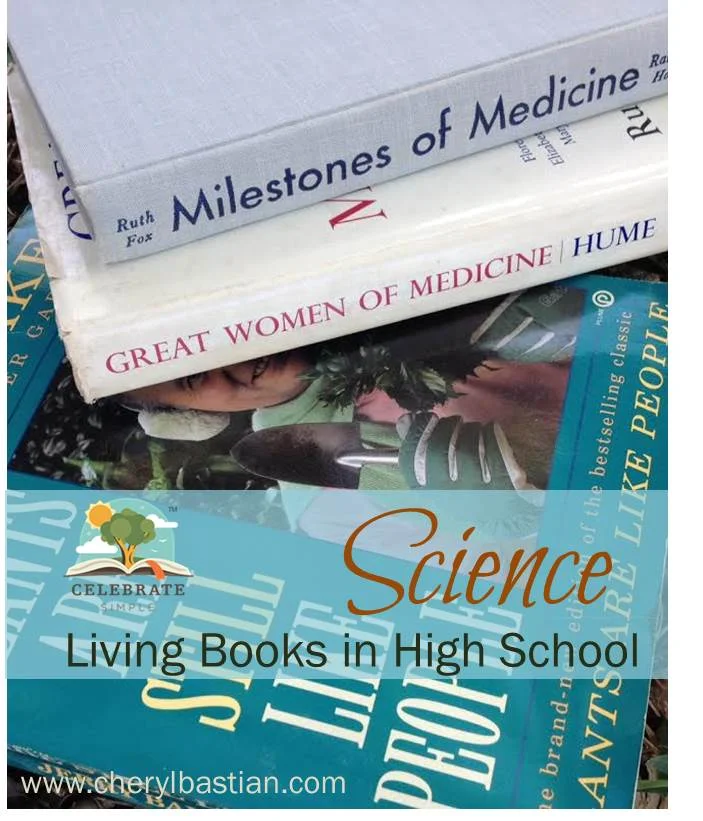
Adding Living Books to our science studies was also a natural fit, especially for learners who had interest in specialty areas or who wanted to dig deeper to learn more about scientists and inventors. As our young adults advanced through the high school years, we branched out into adult and college level materials. 
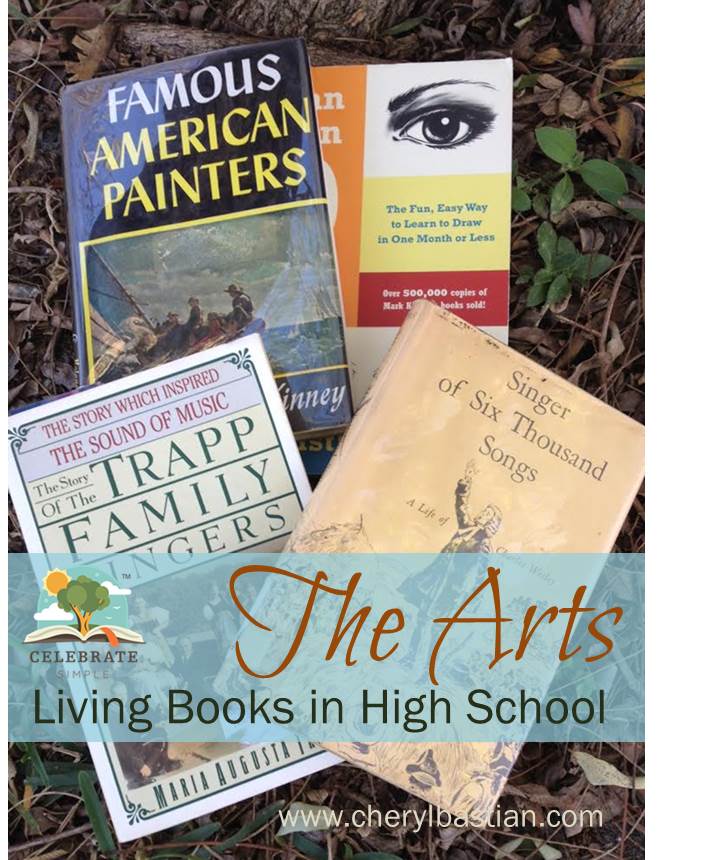
Reaching our creatives with written materials was a challenge at times, unless the reading was related their artistic gifting or interest. If you find yourself in that quandary, know that you are not alone and that your efforts are worth the time spent trying to find them great, applicable reads.

And, I had to let go of my more rigid definition of what a Living Book was in order to be open to the plethora of possibilities I would  have otherwise discounted.

The power of the story--not my definition of Living Book--impacted the life of the reader. 
What about an athlete who loves to read? How can Living Books be interwoven in a personal fitness or weight training course? And, what about an athlete who would rather play ball than read?

Living Books have the power to pull in even the most reluctant reader! 

Living Books can give life to any subject, if we allow them the opportunity to do so. Recently, one daughter began to lean toward personal growth and leadership materials, while another continued on her pursuit of all things medical. Why not include Living Books in that area, too!

If you are in Orlando over Memorial Day weekend, I would love for you to join me in my workshop, Keeping High School Alive with Living Books, at the FPEA Convention. This workshop will offer insight as to how Living Books bring high school studies to life and influence choices learners make beyond the tassel turning. The workshop will be packed with specific ideas in regards course content, book titles, and life-learning experiences. Hope to see you there! 


Most Popular Posts of 2016

2016 is marked as significant.

Why? Because every moment of our days mattered--the triumphs and the trials. We lived and learned together being intentional about using what was real and relational--from cradle to shingle--toddler to adult. Thank you for walking that journey alongside us! We are grateful for you, our readers! 

As a recap of our year together, I compiled our top 15 posts of 2016. ENJOY! 


The Many Possibilities of High School Success

Just as there are many potential pathways to successfully completing high school--the end result of helping a young adult develop his or her divinely-created strengths and giftings--there are also many different avenues to the young adult's future; the years beyond the turning of the tassel.

If you enjoyed this post, you might also be encouraged by Real-Life for High School Credit: Care and Concerns for the Elderly.


Preschooling, Naturally

Preschool is foundational for life and learning. In fact, it is during the preschool years that little learners master foundational skills which serve as a base for later learning. More importantly, attitudes and temperaments toward learning are set during the preschool and early elementary years.

If you enjoyed this post, you might also be encouraged by "Let Me Do It!" Helping Little Learners Become Independent


5 Comments I Don't Regret

Words are remembered, taken with us through our days. This is true for us and it is true for our children and young adults.

If you found this post helpful, you might also enjoy Legacy: Learning Alongside


The Possibilities of Elective Credits - Part II

When I wrote the first edition (who remembers that first spiral-bound resource?) Celebrate High School I included a sample list of potential course titles--both core and elective. When I published my extensive revision in 2015, I expanded my list based on our experience and the experience of those with whom we work.

If the information in this post was helpful, you might want to continue on and read Part III.


32 Ways to Learn from Real and Relational 

Some of my children love making lapbooks, others prefer unit studies. Still others learn best when we incorporate field trips into our days. And, our middle and high school young adults? They have learned at co-ops, through online courses, and with personal independent study. 

If you are being intentional about keeping learning real and relational, you might also be encouraged by the practical life lessons (and history!) in this post-- Living History: 30 Questions that Bring History to Life


8 Skills Children Practice in Puddles

There was much to learn in the puddles. Each learner carried a small fish net, sand bucket or shovel. They were off on an adventure.

Rainy days are natural wonders which intrique little learners. If rain is falling at your house and you are waiting for a safe pause in weather, try this indoor art activity--Torn Paper Rainbows


Grades...In High School

"How do I give grades in high school?"

If designing a transcript is your next step, this post may be helpful--Transcript Matters


Using 4-H for High School Course Content

"Our high school learner is very active in 4-H. Can we use any of what the student is doing toward high school credit?" 

If you have middle school learners and are wondering how you can help them manage time, organize belongings, and pursue interests, this post--Magnificent, Make-A-Difference Middle School--might be helpful. 


Preschooling, Intentionally

Learning is the natural outcome of everyday living, especially for little learners. With a few intentional questions here and a purposeful explanation there, preschoolers can learn naturally from walking alongside older siblings and significant adults. Through everyday experiences, preschoolers gain a jump start to mastering foundational cognitive, social, emotional, physical, and spiritual life skills.  By the time the young learner blows out six candles on the birthday cake, significant progress toward mastery of foundational skills has likely been made.

If you are seeking ways to help your little learners do what they can, 3 Things They Can DO on Their Own, might be helpful. 


Living Books and Independent Studies

An interest evolved into an independent study, a year-long learning adventure. 

Science--especially animal science--is particularly interesting to little learners. If you have little learners with a zest for all things living, check out the book list in Vintage Science Readers for the WIN! 


Nature Adventures Made EASY- A Glimpse into Part of Our Day

Ten minutes later, peering out the bedroom window to check on the adventure, my heart smiled--three little learners discovering, wondering together. Co-laboring in learning. 

Looking for a way to learn math outdoors, in nature, where children crave? Check out Math Adventures!


Using Living Books in High School for Credit

We have used several approaches to formulating classes based on strengths, interests and the future plans of the young adult.

Interested in earning credit for writing college essays? This post--High School Made Simple: College Essays for Credit--might offer some insight. 


SIMPLE Prepositions for Little Learners

Keeping early learning active and fun!

Picture books can encourage learning. Read Aloud to Foster Counting Skills lists some of our favorite math picture books. 


Intentional Cursive Handwriting

Oh yes, there is good reason to teach cursive, teaching correct strokes and rotations. Proper letter formation does make composition easier. However, once initial instruction is complete and letters are formed properly, practice begins. Practice.

Interested in hands-on, real-life, spelling activities? This post--What About Spelling?--has lots of practical ideas. 


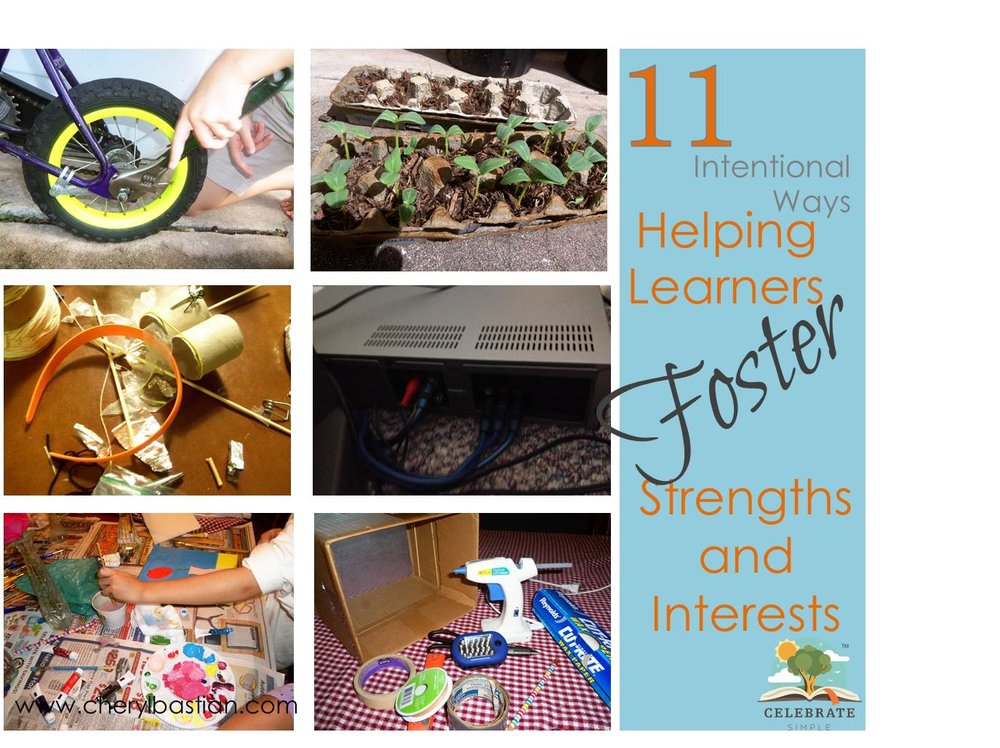
Helping Learners Foster Strengths and Interests

A trip to the electronics store. I was hoping to go alone. You know, time to enjoy quiet; time to think without questions. After all, it is ONLY the electronics store. 

If this post made you curious about interest-based learning, The Benefits of Interests: Motivating Learners, may answer a few more questions. 

Want to know more about how your days can be intentional, real, and relational? Click below to sign up for the Celebrate Simple Newsletter. 

The Possibilities of Elective Credits: Part III

How are elective credits documented?

The answer to this question depends on your state's home education law as well as what college or university choices find their way on your learner's "top ten" list. Your family's record keeping methods will also factor into answering this question. This was definitely the case for our family.

For our family, if a learner has a distinctive interest or an extraordinary gifting--something they naturally spend a good amount of time researching and learning (for us 75 hours for a half credit and 120+ hours for a full credit)--we count if for credit. I personally do not label or flag courses as core or elective on our transcripts (I do however flag dual enrollment, CLEP, or courses taken at other accredited entities). Too many colleges access transcripts differently to flag core and elective courses. What one considers a core course, an academic elective, or an elective another will classify differently. 

As a learner is actively involved in the the learning process, I keep a bullet point list of the concepts learned or experiences completed on a digital document. From that bullet list, I can write an accurate title and course description should we need it for university admission or scholarship applications. Once the course is complete, I add the title, grades, and credit to the transcript--a one-page snapshot of the young adults academic record.

Elective courses often set one young adult learner apart from another, especially if potential applicants have similar, cookie-cutter type elective credits. 

What strengths, interests, or giftings do your learners have which might equate to credit. Some of the courses our learners have completed include Care and Concerns of the Elderly; Drafting and Drawing; Competitive Gaming; Business and Entrepreneurial Principles; Introduction to Early Childhood Education; Nutrition and Health for Disease Prevention; and Interpersonal Relationships. These off-the-beaten-path have proven to give our now adult children life skills they may not have received otherwise. 


Life skills + high school electives = WIN! for preparation beyond the turning of the tassel


This blog post is intended to offer an example of personal experience. It is in no way intended to be legal advice and should not be taken as such. Parents own the sole responsibility for the training and education of their children. 

Real-Life for High School Credit- Care and Concerns of the Elderly

Care & Concerns for the elderly elective credit   .png

Have you ever been through a tough season, a season when you wonder if anyone learned anything?

I have. More than once. 

About three years ago--from January to May--we helped care for and love my grandmother in the last months of her life. I don't regret one day, one minute of how we chose to spend our time. We made wonderful memories with Grams during that time, memories our family relives and smiles over--all of us. But, it wasn't an easy time.

The six months prior, found us spending many hours touring assisted living facilities and government-subsidized care units. There were meetings with social workers and property managers. My high school learner asked if she could be included in the tours and meetings. 

At first, I wondered how she could accompany me and complete her scheduled course work. 

After a few conversations, Mike and I decided there was great value in our high schooler participating in the meetings, discussions, and comparisons. After all, she may be able to add a perspective my mom and I--being very close to the circumstances--might not be able to see. In addition, she was a consumer and might one day be faced with similar decisions. 

I was worried our daughter wouldn't be able to make visits and meetings with us and get her planned work completed. I was fearful and tentative. However, Mike and I decided there was life value to this season. 

Our high schooler would accompany my mom and I. 

Fast forward to the end of May.

After some really difficult months, Grandma passed away. Being the end of May, I was compiling work samples for our year end evaluations and updating my high schooler's transcript. In the process, I asked our daughter to look over the transcript and her portfolio of work samples to determine if I had missed any significant work she had completed--especially independent studies--while my mind was preoccupied with Grandma. 

Her response surprised me. 

"Couldn't I get credit for all I learned while helping with Grammy?"

I answered with a question. 

"What do you think you learned?"

I was astounded by her answers. 

Here are the highlights:

  • Medical care terminology

  • Implications of elderly care, physically as well as psychologically

  • Family care of the elderly

  • Levels of care matter and costs associated with that care

  • Comparing and contrasting residential services and their differences: nursing facility, assisted living, retirement community, memory care

  • Levels of home care and the services rendered

  • Meal preparation, offerings, presentation, individualization of services in different facilities

  • Physical, emotional and spiritual care concerns at facilities

  • Support care for family, if offered

  • Comparison and contrast of social and group activities in facilities

  • Nursing qualifications at each facility- RN, LPN, CNA

  • Staff to patient ratios

  • Emergency response systems and their importance

  • Financial options and obligations

  • Hospice and end of life procedures, care, and considerations

We talked for thirty minutes (at least) about all she had learned and experienced, first-hand, experientially. Not only had our daughter interacted with--playing games, conversing, and caring for--Grammy and other residents several times a week for several months, but she had also made visits to seven facilities and compared the offerings, care, staff qualifications, and financial costs of each. She helped us research at home and we brainstormed questions we would ask at each meeting. 

When our daughter visited with us, she asked questions and held conversations with staff, helping us understand the pros and cons of each location. Near the end of Grammy's life our daughter visited three hospice care facilities and listened to three presentations regarding choices we would have to make as a family. In addition, she observed how people processed Grammy's declining health and eventually her passing--from my parents to her youngest siblings--as we visited, asked questions, processed grief together. 

I couldn't believe what our daughter had learned! None of it was planned. And, I almost missed an opportunity to use her interest--a real-life situation--as a catalyst for learning. 

My daughter wanted to be an active participant of this season in our lives, and it was some of the most valuable learning she could have done that year. 

Could she earn credit for all she had learned? 

In our state, that final answer rests with Mike and I. We confer the credit. we sign the transcript. This is not the case for all states, so research is essential in regards to state requirements.

I also had to determine in my mind--really Mike and I together--whether I could feel confident in the credit we were giving. Would I--or my daughter should she be asked to explain her course work in an essay or interview--be able to substantiate what our daughter had learned? Did I feel the content was high school level or higher?

After researching high school courses (there really weren't but one or two) and content of college credit offerings (this was more helpful) as well as asking questions of professionals in the field, we decided to give our daughter one-half credit for her learning and experience. 

For readers with young adults interested in this field, in my research I learned the Red Cross has a family care-giver course. 

To document the content covered, should our daughter need it for college admission, I wrote the following course description of what she learned. 


Cares and Concerns of the Elderly

This experiential study was initiated by the student as a result of the direct care and concern of her ninety-five year old great-grandmother and her health and care needs during the last nine months of her life. The student interacted with elderly patients at in-patient care centers several times a week. One visit included making and delivering Christmas cards. During the student's visits she served cake and punch at a birthday party, helped residents participate in an Easter egg hunt, escorted patients through a nature garden, played card and board games with patients, and sang Christmas carols with a group of parents and students. As the great-grandmother required complete care, the student researched, visited, and compared nursing care and living accommodations at three local assisted living facilities and three hospice care units, participating in discussions of how to match patient needs with patient care. The student also participated in discussions about blood transfusions, intravenous nutrition, end-of-life care, death, and the grieving process. 


What real-life circumstances is your young adult facing? Do these experiences include internships, community opportunities, or apprenticeships? Do these circumstances or experiences provide high school level (or higher) instruction or content? 

Perhaps your young adult is experiencing something extra-ordinary, something which will impact life--and other people--far beyond the high school years. There may be job shadowing, internships, community opportunities, or apprenticeships involved in the learning. Lives might be changing because of your young adult's learning experience.

Might you consider what those experiences are, how they are impacting lives, and how might they equate to credit? 


This blog post is intended to offer an example of personal experience. It is in no way intended to be legal advice and should not be taken as such. Parents own the sole responsibility for the training and education of their children. 

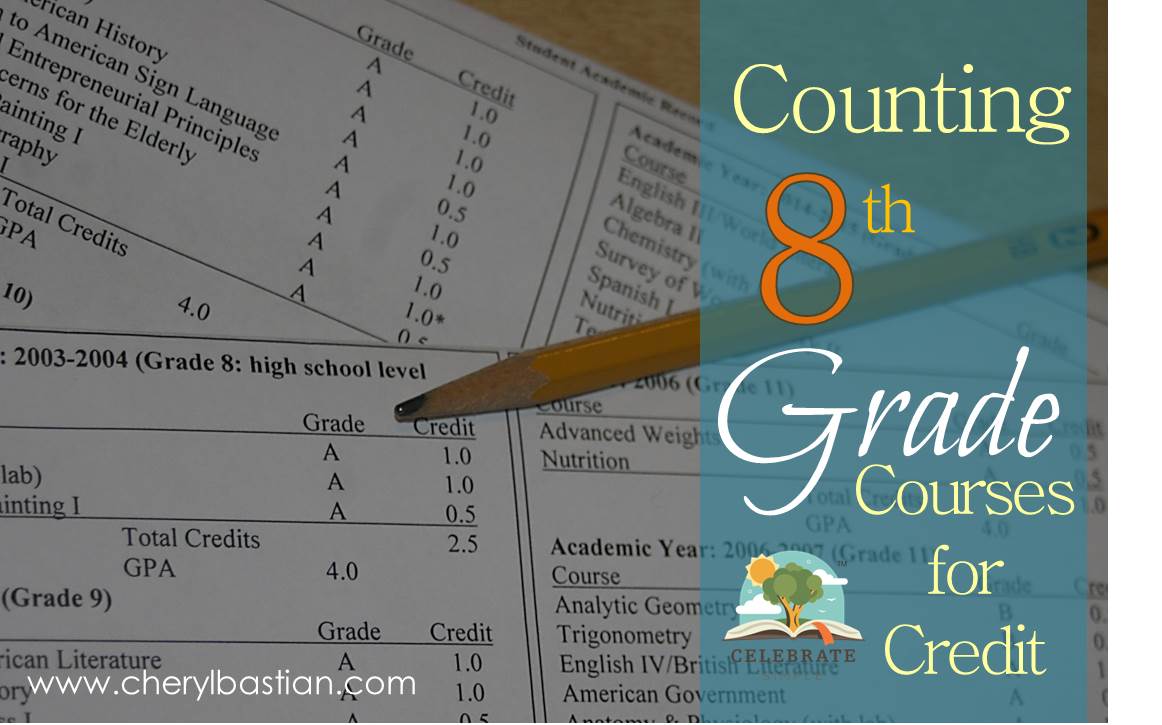
Transcript Matters: Courses Taken in Eighth Grade


Time to answer another commonly asked question. 

"Can we count courses completed in 8th grade for high school credit? And, how do I document them on the transcript?"

If you are asking these questions, you are not alone! 

First, to answer the first question. 

Yes, by all means you can count eighth grade classes for high school credit as long as doing so remains in the bounds of your state's homeschooling statutes. On this homeschooling journey, parents are able to make these decisions (again, based on their state statutes). However, you should know the hows and whys of the decisions you are making. You may be asked to substantiate your rationale as I did for one of the colleges to which one of our graduates applied. 

As with many things, be ready with an answer. 

When we make the decision as to whether to count an eighth grade class for high school credit, I always ask myself, 

"Is the content of the class considered high school level or above?"

If so, I count the credit. 

Now, for the second question,

"How do we include eighth grade courses on the transcript?"

I include eighth grade, high school level courses, on our young adult's transcript. I note the academic year, course title, grade, and credit received. The format I use is highlighted in the box below. 

I include the specifics on a course description document. Click here if you need more information on course descriptions. 

This blog post is intended to offer an example of personal experience. It is in no way intended to be legal advice and should not be taken as such. Parents own the sole responsibility for the training and education of their children. 

College Admissions for Homeschoolers Part II: Admission Must Haves


"Must haves." 

I know, sounds determinate, like "if you don't do this you won't get in." But stick with me. 

I'm not telling you what to do. That is not the point of this post.  

And, there's no way for me or anyone else to tell you exactly what to do for your high school learner. Only you know your student or his or her unique circumstances.

The purpose of this blog post is to share current information so you can be intentional; equipped to make informed decisions for your high schooler. As a mom who's walked the high school path with four very different young adults and an evaluator/consultant who has worked with many families, I understand what works for one student may not work for another.

However, like it or not

there are definite items colleges will request of all their applicants--public, private, and homeschooled.

Knowing what those items are offers applicants opportunity to prepare and to keep paperwork current as courses are completed, hours are served, and achievements are made. I have learned from experience that although we homeschoolers like to dig our heels in the sand and stand our ground (thinking we should or shouldn't have to deal with certain admission requirements), our dug in heals may leave us stuck with little or no options. 

Test Scores. Like it or not, most universities with a traditional mindset still believe testing helps validate grades on a transcript. Many colleges believe that test scores are especially important for home education graduates because their educational environment is potentially less standardized than traditional public or private schools. On the other hand, some universities are moving toward test optional scenarios (as stated in this Washington Post article). Stetson University is one of those schools.

Stetson University, a test-optional school states


“Stetson University values academic achievement, commitment to personal values, leadership, talent, character and initiative above standardized testing. Therefore, submitting standardized test results for admission consideration is optional. Score-optional consideration is an alternative for applicants who feel that their test scores don’t adequately reflect their level of academic achievement and/or accurately predict their potential. ”
— Stetson University website

Though some schools are now test optional, others are not. Still others offer the applicant to make a choice based on his or her strengths. Homeschooling parents find It best to research and then prepare to meet the testing requirements for colleges of choice, if test scores are an admission must.

Knowing test score expectations allows a young adult to be prepared, to choose a specific test from the options, one which will best complement his or her strengths, and then to study for the special characteristics of that test. Some colleges have the same test score requirements for public, private, and homeschooled graduates. Other universities have stricter standards for homeschoolers and even require additional SAT Subject Test scores. 

Emory University has specific test score requirements for homeschoolers. According to their website, 


“The Admission Committee is happy to receive applications from home-schooled students. In addition to meeting all admission requirements and submitting the required results from the SAT or ACT, we ask that a student who has been schooled at home submit results from three SAT II subject exams—one in mathematics and two of the student’s choosing. Additionally, we require at least one letter of recommendation from someone other than a family member. We also encourage home-schooled students to submit a comprehensive explanation of their curriculum.”
— Emory University website

Grades. Universities like grades. Again, this is a traditional educational evaluation method used to place (at least in theory) public, private, and homeschooled graduates on the same plain (whether you agree or not). Knowing whether a college prefers unweighted or weighted GPAs is another aspect of grading with which parents should become familiar. 

Grading in high school doesn't have to be scary. Check out my detailed blog post Grades...in High School. I highlight how we graded some of the most traditional and the most unique courses of our high school journey.

Transcripts. This is another traditional requirement for the applicants and perhaps the most stressful for homeschooling parents. Hence, why some homeschoolers will argue this document is not necessary. However, a large percentage of colleges and universities will have this requirement. Some colleges including Wheaton College, are offering a transcript template on their homeschool admission page. Again, preparation can combat fear. As you build your understanding of transcripts, consider:

  • Most universities want this document on one page; neat, concise and eye-appealing, easy-to-read.
  • The majority of colleges are looking for variety--in content and format. In regards to content, many universities are eager to see depth and individual interests. An unique interest for a student applying as a veterinary medicine major might be Introduction to Veterinary Medicine. Schools will also be looking for the specific courses they require for admission, for example Biology. Class format is important, too. Universities want to know your student can learn and interact in traditional, online, seminar, and hybrid courses. This is why lab sciences and foreign languages are often required for applicants. Overall, they are looking for well-rounded students who will impact their campuses. 
  • Some universities require 16-20 core courses for admission and will offer suggestions on their homeschool admission pages as to what courses they are looking for. Wheaton College is one of those universities. 
  • Be sure the transcript you create contains the information requested by the colleges to which the student is applying. 

University of North Florida requests a transcript containing the standard information required of all applicants, including home educated graduates. 


“Home school students must submit transcripts indicating course title, semester, grade, and awarded credit for all academic courses. Official SAT/ACT scores and official transcripts from accelerated mechanisms are also required.”
— University of North Florida website

Letters of Recommendation. These documents are required of all applicants, public, private, and homeschooled. And, for some universities, this is the second most important documentation on behalf of the applicant. Letters of recommendation are especially important for the home educated applicant as they offer an unbiased perspective of the student. In other words, though the parent may act as the guidance counselor and write a letter from this position, the university will want a glimpse of the student from a source outside of family. Often a youth pastor or instructor from a traditional setting--online, co-op classroom--a coach, or an employer can offer the information a college is needing. In addition, some colleges will have specific guidelines about who they want to write a letter (clergy, employer, coach) as well as when the letter must be written (an instructor from the student's senior year). Not all colleges require specifics letters to be written, but when they do, be sure to follow their guidelines. 

For example, when our first son applied to highly-selective universities, one of the schools required a letter of recommendation from an instructor during the senior year. Though my son had had teachers in previous years through local co-op classes and individual instruction, his senior year courses were taken mostly through home study. However, he was finishing up a second year of Spanish online. I called the university and asked if a recommendation from his online teacher would be acceptable. They agreed, though I wondered how she could even write a recommendation having never met our son. Her letter focused mostly on his work ethic, academic ability and integrity, and timely assignment submission. All good points none of his other letters addressed. 

Princeton University explains what is important for applicants to consider when submitting recommendations. 


“It’s most helpful if your teacher and counselor references come from three different adults who can comment on your intellectual curiosity, academic preparation and promise, and extracurricular involvement. Some home schooled applicants ask a parent to complete the School Report, and they ask others who have known them in an academic context to complete the teacher references. If you have taken any high school or college courses, or had a teacher other than a parent in a particular subject, we encourage you to ask those professors or teachers to write your teacher references.”
— Princeton University website

When our high school students ask mentors, supervisors, or instructors for letters of recommendation we encourage them to follow up with a note of thanks and gratitude. I outlined that process in a blog post, The Thank You After the Letter. 

Interviews. Nine years ago when our son began to receive offers for admission and scholarship, interviews were essential if the student intended to accept a Presidential scholarship. Today however, interviews are becoming more popular for admission. Interviews provide a chance for the student to talk about his or her achievements and aspirations as well as offer an opportunity to exhibit proficient communication and interpersonal skills. College personnel want to know what value the student will bring to the campus.  Rice University is one university which recommends a personal interview.

Additional paperwork may be required. Research each college. Determine what types of documentation each university is requiring. For example, St. John's College asks applicants to write an essay for admission. And, Vanderbilt University suggests student submit an optional curriculum chart. Arizona State asks home educated students to submit a lab sciences evaluation. Though a first reaction may be frustration--as it was for me when I had to write essays about our educational methods and grading system--it is wise to step back, breathe, and take a few minutes to ponder the request. After a thirty second pause, the request may not be as bad as first perceived. 

In our situation, though I was initially discouraged that our son's top school required me to write essays, once I started the process, the pondering of our home education methods was beneficial and indeed helpful for us as a family. I was reaffirmed that indeed we had worked hard together and our son was extraordinarily prepared for his next steps. In the end, that school offered our son a Presidential scholarship, four full years paid tuition. 

Once we know what will be required for admission, we can get down to the business of creating the documents and records we need. We'll take a closer look at specific admissions paperwork in the next post. 

This blog post is intended to offer an example of personal experience. It is in no way intended to be legal advice and should not be taken as such. Parents own the sole responsibility for the training and education of their children. 

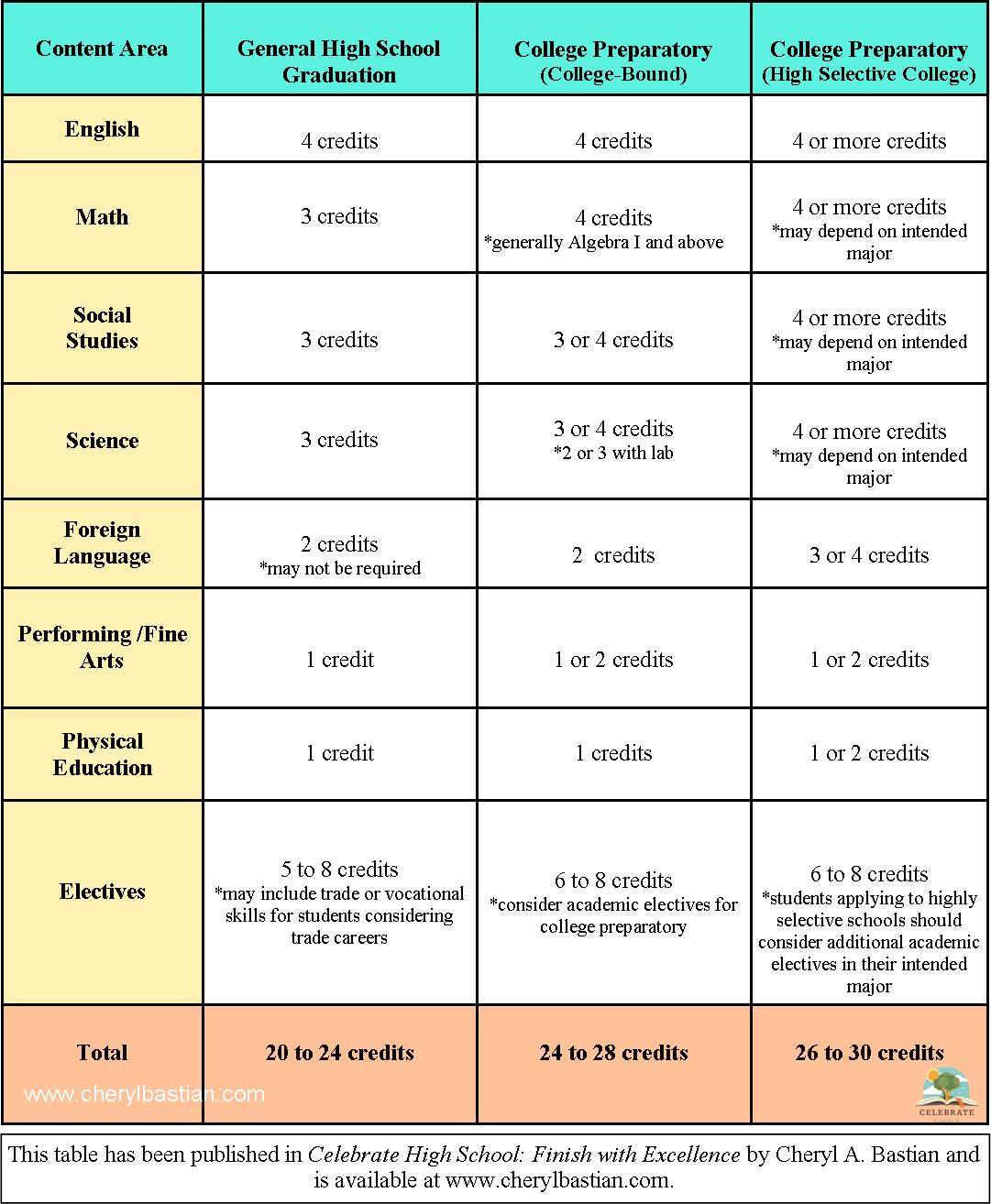
General Credit and Graduation Guidelines for Colleges and Universities

Graduation requirements vary from state to state, university to university, hence the variable credit guidelines detailed below. Research your state’s graduation requirements as well as college admission requirements for colleges of interest. Aim above the minimum. This chart guides parents who desire to build a competitive student profile, for entrance to the workforce or the university. These guidelines should not be taken as educational or legal counsel.

Turn that Tassel! Middle and High School Home Education with Excellence
Sale Price: $38.00 Original Price: $45.00

High school is not a one-size-fits all experience. The journey is unique for every student. Turn that Tassel! equips parents and students of any educational philosophy with easy-to-follow explanations and ready-to-use examples to help families customize their home education programs.   

This blog post is intended to offer an example of personal experience. It is in no way intended to be legal advice and should not be taken as such. Parents own the sole responsibility for the training and education of their children.